

 24/7 emergency services

 Call Us Today - (856) 305-9883
Key Points:
- Learning how to repair a standing seam roof requires early problem identification, the correct tools, and knowing when to call a professional.
- Regularly inspect your standing seam roof for loose fasteners, separated seams, or water stains to prevent major damage from South Jersey’s climate.
- Always utilize professional-grade tools and materials for effective repairs, and seek expert help for complex issues or safety concerns.
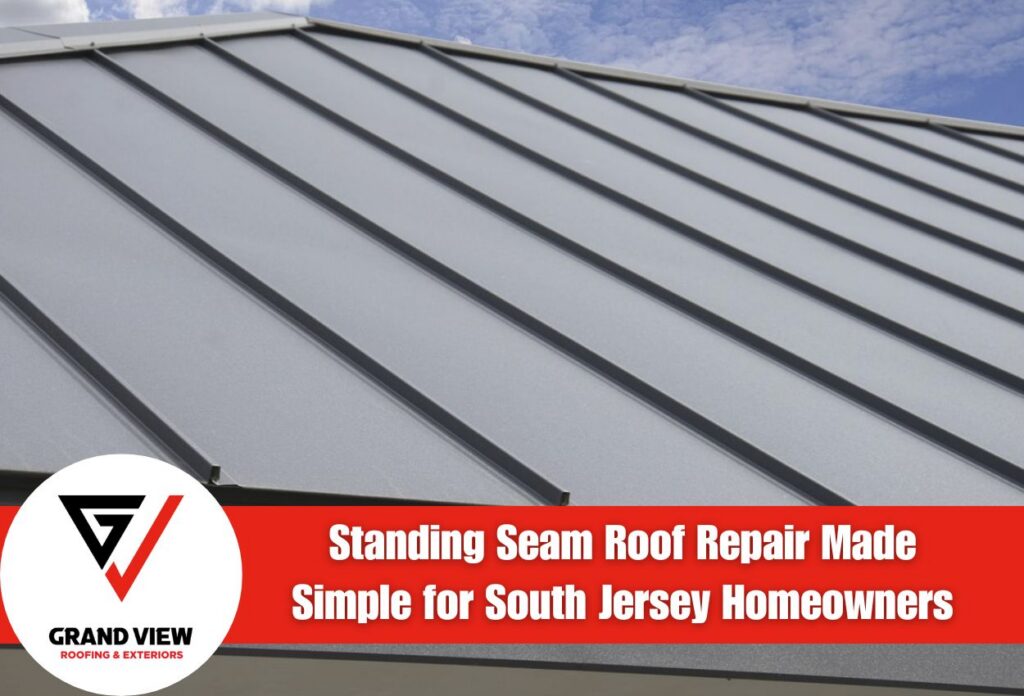
Standing seam metal roofs require specific repair techniques that differ significantly from traditional asphalt shingle maintenance. South Jersey’s coastal environment presents unique challenges for these roofing systems, with salt air corrosion and dramatic seasonal temperature changes causing panels to expand and contract, potentially compromising the seam’s structural integrity over time.
Understanding how to repair a standing seam roof begins with identifying common issues such as loose fasteners, damaged panels, and failed sealant applications. While standing seam roof maintenance often appears straightforward, certain repairs require professional expertise to prevent expensive damage and maintain coverage. Metal roof leak repair typically involves addressing seam separations, punctures, or improper panel alignment that allows leaks to form.
Homeowners can handle basic standing seam panel replacement and roof seam sealant application with proper metal roofing tools and materials. However, structural damage, extensive panel replacement, or complex flashing repairs require professional intervention to ensure proper installation and long-term performance of the roofing system.
Identifying Common Problems Before They Become Major Issues
Early detection prevents minor standing seam roof maintenance issues from escalating into expensive repairs. Regular visual inspections should focus on loose fasteners, which appear as raised or missing screws along panel edges. Separated seams indicate thermal movement stress or improper installation, while visible panel movement during wind suggests compromised attachment points requiring immediate attention.
Interior damage assessment reveals problems not visible from outside the structure. Water stains on ceilings or walls signal active leaks requiring quick metal roof leak repair. Moisture buildup in attics indicates ventilation issues or failed seam sealant application. Standing seam panel replacement becomes necessary when panels show significant deformation or multiple puncture points that compromise structural integrity.
Professional inspection involves checking fastener torque specifications and examining thermal expansion joints for proper function. Metal roofing tools and materials used during initial installation may loosen over time, creating entry points for leaks to form. Addressing these issues quickly prevents extensive structural damage and maintains the roof’s weatherproof barrier, essential for protecting the underlying building components.
Essential Tools and Materials for Effective Standing Seam Repairs
Professional-grade equipment forms the foundation for successful standing seam roof maintenance projects. Seaming tools, including specialized pliers and crimping machines, ensure proper panel connections that withstand thermal expansion. Quality fasteners rated for coastal environments resist corrosion common in South Jersey’s humid climate. Safety equipment, including non-slip footwear and harness systems, provides necessary protection when working on metal surfaces.
Material selection directly impacts repair longevity and performance standards. Compatible sealants designed for metal roofing applications provide flexible seam protection that accommodates panel movement. Standing seam panel replacement requires matching gauge thickness and coating specifications to maintain structural integrity. Hardware selection must consider wind load requirements and local building codes to ensure proper attachment strength.
Metal roofing tools and materials should align with existing roof specifications for the best possible results. Butyl tape sealants offer great adhesion for roof seam sealant application, while polyurethane options provide enhanced flexibility. Galvanized or stainless steel fasteners prevent premature failure from atmospheric exposure. Professional metal roof leak repair requires precision tools that create weatherproof connections without damaging surrounding panels or compromising the roof’s protective barrier system.
Leak Repair Techniques That Actually Work
Proper seam resealing procedures require mechanical seaming tools designed specifically for standing seam roof maintenance applications. Begin by cleaning existing sealant residue from panel edges using appropriate solvents that won’t damage metal coatings. Apply new roof seam sealant evenly along the connection points, ensuring complete coverage without excess buildup that could interfere with thermal expansion. Use seaming pliers to recreate the original fold pattern, maintaining consistent pressure throughout the connection process.
Emergency patching methods provide immediate leak control during severe weather when permanent repairs aren’t feasible. Temporary patches using compatible metal pieces and butyl tape create effective barriers until professional metal roof leak repair can be completed safely. Standing seam panel replacement may require partial repairs using sheet metal patches that match existing panel profiles and thickness specifications.
Metal roofing tools and materials must remain accessible for urgent repairs, particularly during storm seasons. Keep emergency supplies, including sealant tubes, metal patches, and basic fasteners, readily available. Temporary solutions should never compromise the structural integrity of a roof or create additional gap points that could make the existing problems worse during extended bad weather.
Panel Replacement Strategies for Damaged Sections
Safe panel removal requires systematic disconnection of seam connections without damaging adjacent sections. Carefully disengage seam edges using specialized tools as described, working sequentially to avoid panel stress. Release fasteners in reverse installation order, maintaining support for the damaged panel throughout the removal process to prevent sudden shifts that might compromise neighboring connections.
Proper installation of replacement panels requires precise alignment with existing roof geometry and thermal expansion requirements. New panels must match original specifications, including gauge thickness, coating systems, and dimensional profiles, to ensure seamless integration. Establish correct seam formation by maintaining consistent folding patterns that create weatherproof barriers while accommodating normal thermal movement expected throughout seasonal temperature variations.
Professional standing seam panel replacement involves careful attention to fastener placement and torque specifications that secure panels without over-compression. Metal roofing tools and materials used during installation must create connections that allow controlled thermal expansion while preventing leaks. Quality roof seam sealant application along connection points provides additional protection against leaks, ensuring long-term standing seam roof maintenance effectiveness and preserving overall system performance standards.
Preventive Maintenance Practices That Extend Roof Life
Regular maintenance schedules tailored to South Jersey’s climate conditions significantly extend the standing seam roof’s lifespan and prevent expensive emergency repairs. Post-storm inspections should occur within 48 hours of severe weather to identify loose fasteners, debris damage, or seam displacement before leaks begin. Temperature extremes common to the region cause metal panels to expand and contract, making seasonal assessments important for detecting stress-related problems early.
Periodic inspection of fasteners and panel connections helps maintain stability. Clean debris from panel surfaces and drainage systems monthly to prevent water pooling that accelerates corrosion. Schedule roof seam sealant application refresh every 3 to 5 years, depending on exposure conditions and manufacturer recommendations for the best weatherproofing performance.
Professional maintenance protocols involve systematic inspection of thermal expansion joints and panel attachment points that experience the greatest stress during seasonal changes. Document fastener conditions during each inspection to track deterioration patterns and predict replacement needs. Establish cleaning schedules that remove salt deposits and organic growth common in coastal environments, preventing premature coating degradation that leads to expensive standing seam panel replacement projects.
When Professional Help Becomes Necessary
Certain standing seam roof conditions exceed typical homeowner repair capabilities and require professional contractor intervention for safety and effectiveness. Steep roof angles above 8:12 pitch create dangerous working conditions that require specialized equipment and experienced technicians. Electrical hazards near power lines pose life-threatening risks during metal roof leak repair operations, particularly when using conductive metal roofing tools and materials near energized systems.
Structural concerns involving damaged roof decking or compromised support systems need professional assessment before attempting standing seam panel replacement. Multiple panel failures across large roof sections indicate systemic problems that require an evaluation and coordinated repair strategies. Building code compliance issues often arise during extensive repairs, requiring permits and inspections that only licensed contractors can obtain legally.
Warning signs requiring professional intervention include roof deck damage visible through panel gaps, which suggests a leak has compromised underlying materials. Extensive seam failures affecting multiple panels indicate installation defects or structural movement requiring engineering evaluation. When standing seam roof maintenance reveals problems affecting the building’s structural integrity or involves complex roof seam sealant application around gaps, professional expertise ensures proper resolution and prevents additional damage.
Expert Standing Seam Roof Repair in South Jersey
If you’re dealing with the unique challenges of maintaining a standing seam roof in South Jersey’s varied climate, from harsh coastal conditions to temperature fluctuations, it’s important to address issues quickly to prevent extensive damage. Grand View Roofing & Exteriors specializes in diagnosing and repairing any problems your metal roof might face, ensuring longevity and durability against the elements.
Don’t wait for minor wear and tear to turn into major repairs. Whether it’s loose fasteners, seam separations, or leaks, our team is equipped to handle all aspects of standing seam roof maintenance and repair. With professional tools and materials specifically chosen for South Jersey weather conditions, we guarantee quality workmanship that adheres to local building codes.
For immediate assistance or to schedule a detailed roof inspection, call Grand View Roofing & Exteriors now at (856) 305-9883. Protect your home effectively with our expert roofing solutions!