

 24/7 emergency services

 Call Us Today - (856) 305-9883
Hailstorms can wreak havoc on roofing systems, leaving behind damage that ranges from subtle dents to significant structural issues. Understanding the signs of hail damage on roof surfaces becomes crucial for homeowners who want to protect their investment and maintain their property’s integrity. Many homeowners struggle to identify storm damage because hail impacts often create problems that aren’t immediately visible from ground level.
Detecting hail damage early makes a significant difference in preventing expensive repairs down the road. Water infiltration through compromised shingles can lead to interior damage, mold growth, and structural deterioration if left unaddressed. Insurance companies typically require prompt reporting of storm damage, making a quick hail damage roof inspection essential for a successful claims process.
Identifying hail damage on shingles requires knowledge of what to look for and where damage typically occurs. A roof assessment after storm damage involves examining various components of the roofing system, from asphalt shingles and gutters to flashing and vents. Each material responds differently to hail impact, creating distinct patterns and signs that indicate when roof hail damage repair or hail-damaged roof replacement becomes necessary. Recognizing these indicators helps homeowners take appropriate action to restore their roof’s protective capabilities.
Visible Signs on Asphalt Shingles That Signal Hail Impact
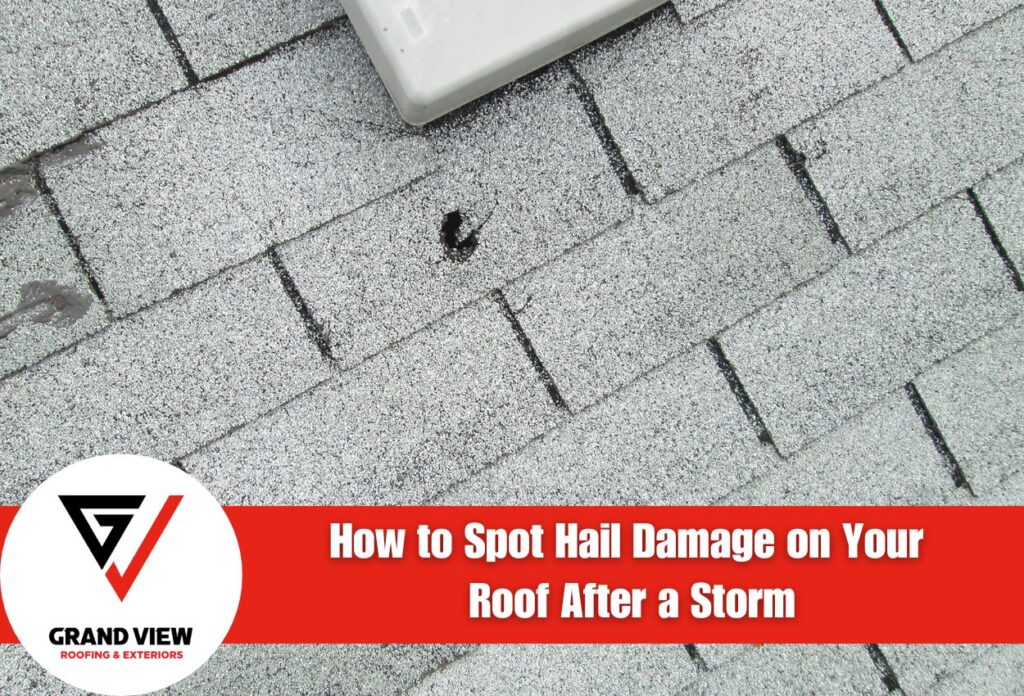
Asphalt shingles display distinctive patterns when struck by hail that differ significantly from normal wear and tear. Granule loss represents one of the most common indicators, appearing as dark spots or circles where protective granules have been knocked away from the shingle surface. These exposed areas reveal the underlying mat material, creating vulnerable points where moisture can get in and cause further deterioration.
Bruising patterns on shingles often appear as soft spots or depressions that feel spongy when touched. Unlike age-related deterioration that occurs gradually across entire shingle surfaces, hail damage creates random impact marks scattered throughout the roof. Fresh hail strikes typically show sharp, clean edges around damaged areas, while damage from weathering displays more uniform fading and granule loss.
Cracked or split shingles indicate more severe hail impacts that have compromised the shingles’ structural integrity. These fractures may appear as hairline cracks or complete tears extending across the shingle width. An assessment after storm damage should focus on identifying these splits, as they create immediate pathways for water. A professional hail damage roof inspection can differentiate between impact-related cracks and those caused by thermal expansion, aging, or manufacturing defects. The random distribution of hail-damaged areas contrasts with the systematic patterns typically seen in age-related shingle deterioration, making proper identification crucial for determining when roof hail damage repair becomes necessary.
Metal Components and Gutters Tell the Hail Damage Story
Metal components throughout the roofing system serve as excellent indicators for detecting hail impacts because they retain visible dents and dings that clearly show storm activity. Flashing around chimneys, vents, and roof gaps displays obvious circular dents when struck by hail, creating permanent evidence of damage. These metal surfaces cannot hide damage like other roofing materials, making them valuable diagnostic tools during storm damage roof assessment.
Gutters and downspouts provide particularly reliable evidence for identifying hail damage on shingles and determining overall storm impact. The size and depth of dents in aluminum gutters directly correlate with hailstone diameter, helping property owners estimate the severity of potential roof damage. Hail that is a ¼ inch typically creates small, shallow dents, while larger stones leave deep impressions that may actually puncture thin metal surfaces.
Air conditioning units, satellite dishes, and other metal roof equipment show similar impact patterns that support hail damage roof inspection findings. These components often sustain visible damage that insurance adjusters use to verify storm activity and assess claims. The random distribution of dents across metal surfaces matches the chaotic nature of hailstone impacts, distinguishing storm damage from other causes like falling branches or construction debris. Professional roof hail damage repair assessments examine these metal indicators alongside shingle damage to build comprehensive documentation of storm impacts and determine appropriate repair strategies for restoring complete roof system protection.
Interior Warning Signs That Point to a Compromised Roof
Water stains on ceilings and walls represent the most obvious interior indicators that hail has created pathways for moisture through the roofing system. These stains typically appear as brown or yellow patches that may expand over time as water continues to seep through compromised areas. Fresh water stains often display darker edges with lighter centers, indicating active leaks that require immediate attention during hail damage roof inspection processes.
Ring-shaped stains suggest ongoing drips from concentrated leak points, while widespread discoloration indicates broader roof compromise affecting larger areas. Paint peeling or wallpaper bubbling near ceiling lines can also mean some leaks may stem from hail-damaged roof surfaces, allowing water to get into your home.
Homeowners should monitor the moisture levels of their attic following severe weather to be sure no damage was done to the roofing system. Damp insulation loses its effectiveness and may develop musty odors, which could indicate potential mold growth. Loose or displaced insulation materials suggest water intrusion has occurred, particularly when combined with visible wet spots on the attic floor or structural members. These interior symptoms often develop days or weeks after initial hail impacts, making regular post-storm monitoring essential. A roof assessment after storm damage should include attic inspections to identify these early warning signs before they escalate into major structural problems requiring extensive roof repair or a complete hail-damage roof replacement to restore proper moisture protection.
When to Call a Professional for Storm Damage Assessment
Roof inspections following severe weather events involve significant safety risks that many homeowners underestimate. Wet surfaces, loose debris, and potentially damaged structural components create hazardous conditions that require proper equipment and training to navigate safely. Professional inspectors possess specialized ladders, safety harnesses, and non-slip footwear designed specifically for roof access, along with the experience to recognize unstable areas that could lead to serious injury.
Steep roof pitches, heights above two stories, and fragile materials damaged by hail impacts increase the danger level beyond what most property owners should attempt. Insurance companies recognize these safety concerns and typically accept professional inspection reports without requiring homeowner verification. The liability risks associated with roof climbing often exceed any potential savings, particularly when considering medical expenses from potential falls or additional damage caused by inexperienced inspection techniques.
Professional inspectors identify subtle damage indicators that untrained eyes frequently overlook during initial storm damage roof assessment. Trained specialists recognize early-stage granule loss patterns, detect microscopic cracks in sealants, and evaluate the structural integrity of decking materials beneath visible shingle surfaces. They understand how different hail sizes create specific damage signatures and can differentiate between storm impacts and normal aging processes that affect insurance claim validity. Professional hail damage roof inspection includes documentation, photography, detailed measurement records, and comprehensive reports that support successful insurance claims while ensuring no critical damage goes undetected during the evaluation process.
Working with Insurance Companies on Hail Damage Claims
Proper documentation serves as the foundation for successful hail damage claims, requiring photos and detailed notes that capture the extent of the roof damage. Insurance adjusters rely on clear visual evidence showing impact patterns, granule loss, and structural damage to assess claim validity and determine appropriate settlement amounts. Homeowners should photograph damaged areas from multiple angles, including close-up shots that highlight specific impact points and wider views that show damage distribution across the roof surface.
Creating records of damage involves noting the date of the storm, the size of the hail, and specific locations where impacts occurred throughout the roofing system. Insurance companies expect thorough documentation that correlates visible damage with recent weather activity in the area. Professional storm damage roof assessment reports provide detailed measurements, evaluations of the material’s condition, and expert opinions that strengthen claim submissions and reduce the likelihood of disputes during the adjustment process.
Timeline considerations become critical factors in successful claim processing, as most insurance policies require prompt notification following storm events. Delayed reporting can complicate claim approval and may result in coverage denials if insurance companies determine that additional damage occurred due to homeowner negligence. Professional hail damage roof inspection within days of the storm event provides the strongest foundation for insurance claims, establishing clear connections between weather activity and roof damage.
Next Steps for Repair and Roof Protection
After completing a thorough assessment of hail damage, property owners face important decisions regarding repair versus replacement options. The extent of damage discovered during professional inspection determines the most cost-effective approach for restoring roof integrity. Minor granule loss and isolated impact areas typically qualify for targeted roof hail damage repair, while widespread damage affecting multiple roof sections often warrants complete hail-damage roof replacement to ensure long-term protection.
Repair options work effectively when damage affects less than 30% of the roof surface and structural components remain sound. Individual shingle replacement, flashing repairs, and gutter restoration can address localized storm impacts without requiring extensive reconstruction. However, when identifying hail damage on shingles reveals systematic compromise across large areas, replacement becomes the more practical solution. Age factors also influence these decisions, as older roofing systems may lack the durability needed to support partial repairs alongside undamaged sections.
Preventive measures can significantly improve roof resilience against future hailstorms through strategic material upgrades and protective treatments. Impact-resistant shingles rated for severe weather conditions offer enhanced protection compared to standard asphalt materials. Specialized coatings designed for hail protection create additional barriers that help distribute impact forces across wider surface areas. Regular maintenance that addresses minor issues before they become major vulnerabilities strengthens overall storm resistance. A professional storm damage roof assessment can identify specific areas where preventive improvements provide the greatest protection value, helping property owners make informed decisions about upgrading their roofing systems to withstand future severe weather events.
Expert Hail Damage Roof Repair by Grand View Roofing & Exteriors
If you’ve noticed any of the common signs of hail damage on your roof, such as granule loss, cracked shingles, or dents on metal components, it’s crucial to act swiftly to protect your home. Hail damage can compromise your roof’s integrity and lead to more severe problems if not addressed. Don’t risk climbing on the roof yourself, it’s important to call in the professionals to ensure a safe and thorough assessment.
Grand View Roofing & Exteriors specializes in identifying and repairing hail damage. Our experienced team can provide a comprehensive storm damage roof assessment and tailor a repair or replacement solution to fit your needs. Don’t wait until it’s too late to restore the safety and appearance of your home.
Call us today at (856) 305-9883 for a professional evaluation and to discuss your hail damage roof repair options.