





 24/7 emergency services


 Call Us Today - (856) 305-9883


Everything You Need to Know About A Commercial Roof Repair in South Jersey
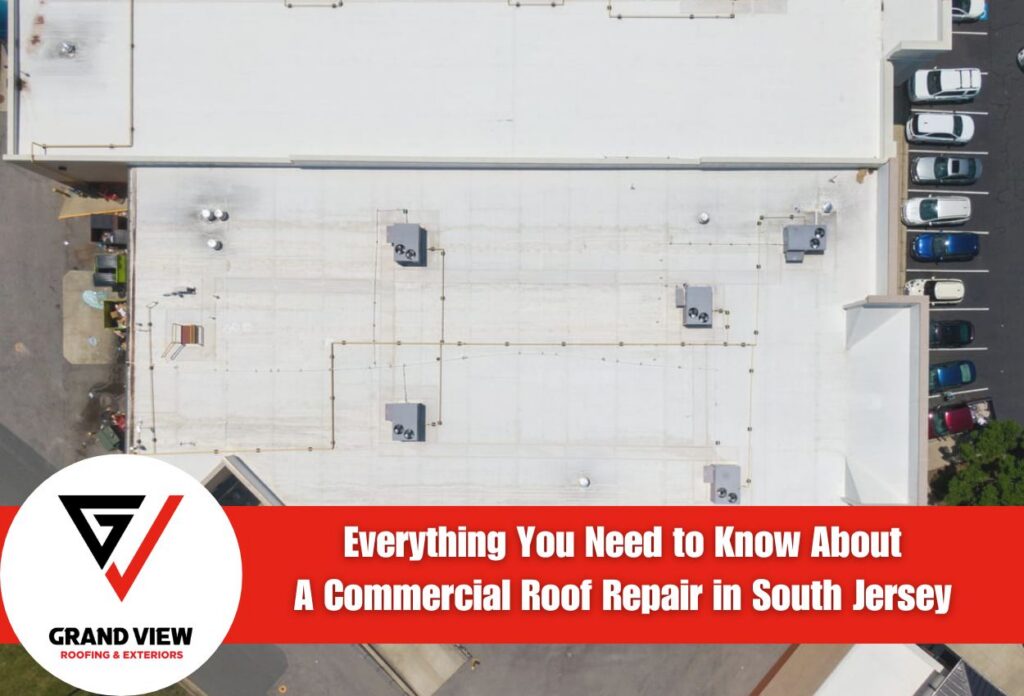

South Jersey commercial roofs face a combination of coastal humidity between 70% and 80%, annual rainfall of 45 to 50 inches, and repeated temperature changes that can crack membranes and cause seals to fail faster than in most other regions, and fixing them the right way requires local knowledge, not generic advice. This guide covers everything South Jersey business owners and property managers need to make smart decisions about commercial roof repair.
From warehouses in Gloucester County to retail centers along the Shore, the region’s flat and low-slope roofs take a beating year-round. Salt-laden air off the Atlantic accelerates corrosion on fasteners and degrades membranes faster than inland properties face. What works for a building in the Midwest often falls short here.
Inside this article, you will find the most common warning signs of roof failure, a breakdown of repair costs, material options suited to South Jersey’s climate, contractor selection guidance, and seasonal timing recommendations for scheduling work.
*Please note, price ranges listed in this article may not reflect the final cost of your project. Prices are subject to change based on various factors such as local labor rates, material quality, and more. All costs established in this article are rough estimates based on average industry rates.
What Makes Commercial Roof Repair in South Jersey Different From Other Regions?
South Jersey commercial roofs wear out faster than those in most inland regions because of a combination of salty air, high humidity, and wide temperature swings that work together to break down materials year-round. Coastal humidity here averages 70% to 80%, and the region receives 45 to 50 inches of rain annually, spread across all four seasons, meaning roofing membranes rarely get an extended dry period to recover from stress.
Salt-filled air blowing in off the Atlantic Ocean is one of the most damaging forces a South Jersey commercial roof faces. Over time, airborne salt corrodes exposed fasteners and gradually breaks down membrane surfaces, even on newer systems. This process happens much faster near the Shore than in inland markets, and it accelerates wear on the metal components that hold insulation boards, flashing, trim, and roof assemblies together.
Temperature changes add another layer of damage. Winter lows in South Jersey drop to 20 degrees to 30 degrees Fahrenheit, while summer highs climb to 85 degrees to 90 degrees. That 60-plus-degree swing forces flat and low-slope roofing membranes to expand in summer and contract sharply in winter. Repeated over many seasons, this thermal cycling causes small cracks to form, seams to separate, and edge flashings to pull away from parapets, turning minor surface wear into active water intrusion.
The age of South Jersey’s commercial building stock makes all of this more urgent. A large share of the region’s warehouses, retail centers, and industrial facilities were built between the 1970s and 2000s. Many of those original roofing systems are at or beyond their expected service life right now. A roof that might last 25 years in a drier, inland climate can fail years earlier in South Jersey’s coastal environment, which is why property managers here need to monitor for warning signs more frequently than their counterparts in other parts of the country.
What Are the Signs Your Commercial Roof Needs Repair in South Jersey?
South Jersey commercial roofs show two categories of warning signs, interior and exterior, and catching either type early can prevent a minor seam crack from becoming a full interior flood within hours of a summer storm.
Interior Warning Signs
- Water stains on ceilings or walls: Brown or yellow discoloration below the roof deck points to active or recent water intrusion. Even older-looking stains deserve investigation because flat roofs can channel water far from the original entry point before it appears inside.
- Mold or mildew odor: A musty smell in storage areas, offices, or near HVAC equipment often means moisture has been trapped inside the roof assembly long enough for biological growth to start, sometimes weeks before visible damage appears.
- Daylight visible through the roof decking: Any visible light coming through a roof deck means the assembly has failed and requires immediate attention, not a scheduled inspection.
- Sagging interior ceilings: Deflection in ceiling panels or drywall beneath a flat roof section suggests ponding water or saturated insulation, adding dead weight to the roof deck, a structural concern, not just a surface one.
- A sudden spike in energy bills: Wet or compressed polyiso insulation loses R-value fast. If heating or cooling costs jump without another explanation, saturated insulation is a likely cause in South Jersey commercial buildings where R-25 to R-30 continuous insulation is the minimum standard.
Exterior Warning Signs
- Membrane bubbling or blistering: Blisters form when heat trapped beneath a single-ply or modified bitumen membrane has nowhere to escape. South Jersey’s summer highs of 85 degrees to 90 degrees Fahrenheit, combined with coastal UV intensity, make flat roofs especially prone to this on darker membrane surfaces.
- Ponding water beyond 48 hours: Standing water that remains on a flat roof more than 48 hours after a storm signals a drainage problem. Leaf fall and storm debris frequently clog interior drains and scuppers in South Jersey, making this one of the most common post-storm findings.
- Visible cracks or splits in seams: Seam separation on TPO, EPDM, or modified bitumen systems results from repeated thermal movement across South Jersey’s 60-plus-degree annual temperature range. Even a hairline split can admit wind-driven rain during a summer storm and produce an active interior leak within hours.
- Damaged or missing flashing: Flashing around parapets, curbs, and gaps takes the most stress from thermal movement and is often the first point of failure on aging South Jersey commercial roofs.
- Granule loss on modified bitumen systems: Granule shedding exposes the underlying bitumen layer to direct UV degradation, shortening the system’s remaining service life faster than UV exposure alone would on a protected surface.
- Rust streaks near fasteners: Orange streaking across a membrane or metal component is a direct result of salt-filled air corrosion, a process that moves faster on South Jersey properties near the Shore than on inland buildings and signals fastener failure that can compromise the entire roof assembly.
South Jersey’s summer storm season can turn a minor seam crack into an active interior leak within hours of wind-driven rain, which means waiting for the next scheduled inspection is not the right call after any visible exterior damage appears. A full flat roof inspection checklist covering all of these indicators in greater detail is available in a related article in this series, and scheduling one with a qualified South Jersey contractor after any significant storm is strongly recommended.
What Types of Commercial Roofing Systems Are Most Common in South Jersey, and How Does Each Get Repaired?
The four dominant commercial roofing systems across South Jersey EPDM, TPO, Modified Bitumen, and Built-Up Roofing each require a different repair method, and choosing the wrong approach for the material in front of you will cause the repair to fail prematurely.
| Roofing System | Common Application | Typical Lifespan | Primary Repair Method | South Jersey Suitability Note |
|---|---|---|---|---|
| EPDM (synthetic rubber) | Warehouses, flat roofs | 20 to 25 years | Patch and re-seam: lap seam adhesive repair | Excellent resistance to temperature changes: vulnerable to petroleum-based solvents |
| TPO (thermoplastic polyolefin) | Retail centers, industrial buildings | 15 to 20 years | Hot-air welded seam repair | Highly reflective white surface reduces cooling costs during South Jersey summers with highs of 85 degrees to 90 degrees |
| Modified Bitumen | Older commercial buildings from the 1980s to the 2000s | 15 to 20 years | Torch-applied or cold-process patch | Common across South Jersey’s aging commercial stock, granule loss accelerates UV damage |
| BUR (Built-Up Roofing) | Heavy commercial buildings | 20 to 30 years | Flood coat reapplication: gravel surface replacement | Excellent waterproofing, but a heavy dead load structural capacity review is recommended for South Jersey buildings |
South Jersey falls within IECC Climate Zone 4A, which sets a minimum polyiso insulation standard of R-30 for commercial roofs. When a leak saturates that insulation layer, the repair cannot stop at the membrane surface: compromised insulation must be replaced as well, which adds both cost and timeline to what may have started as a straightforward patch job. A repair that skips insulation replacement on a wet assembly will continue to lose R-value and create conditions for mold growth inside the roof deck. For a deeper look at how EPDM and TPO repair decisions differ on South Jersey flat roofs, a dedicated article on flat roof repair for commercial buildings in the region covers the trade-offs between these two systems in much greater detail.
How Much Does Commercial Roof Repair Cost in South Jersey?
Commercial roof repair costs in South Jersey range from $500 for a minor patch to $15,000 or more for partial membrane replacement, with the final number driven by roof size, material type, damage severity, and how difficult the property is to access. Coastal and rural county locations can add contractor mobilization costs that inland properties don’t face. Understanding the typical ranges before calling for bids helps set realistic expectations and makes it easier to spot a quote that is out of line.
| Repair Type | Typical Cost Range | Influencing Factors | Notes for South Jersey Properties |
|---|---|---|---|
| Minor patch repair | $500 to $1,500 | Membrane type, accessibility, patch size | Most effective when caught before water reaches the insulation layer |
| Seam or flashing repair | $1,000 to $3,500 | Linear footage, material compatibility, parapet height | Flashing failures are common on aging South Jersey buildings due to salty air corrosion and thermal movement |
| Ponding water correction and drain repair | $2,000 to $5,000 | Drain count, slope correction needed, debris clearance | Storm debris clogs interior drains frequently: standing water beyond 48 hours signals a drainage problem |
| Partial membrane replacement | $5,000 to $15,000+ | Square footage, system type, roof deck condition | FM/UL wind uplift-compliant materials required: certified installation adds labor premium |
| Insulation replacement due to saturation | $3,000 to $10,000+ | Extent of saturation, polyiso board thickness, roof deck access | NJ UCC requires a structural capacity review if roof deck damage is suspected: minimum R-25 to R-30 polyiso must be restored |
| Emergency storm damage repair | $2,500 to $8,000+ | Damage extent, after-hours mobilization, and material availability | Summer storm season in South Jersey can turn minor damage into an active interior leak within hours |
Three cost drivers are specific to South Jersey that property owners should account for when budgeting. First, coastal and rural county properties carry higher contractor mobilization costs than properties in denser inland markets. Second, any repair where insulation or roof deck damage is suspected triggers a structural capacity review under NJ UCC, an added step that takes time and affects the final invoice. Third, repairs requiring FM or UL wind uplift-certified materials and installation carry a labor premium over standard patchwork, but that certification is required to meet local design wind speed requirements.
Addressing a seam split or flashing failure early, before water saturates the polyiso insulation board beneath it, can reduce total repair costs by 40% to 60% compared to waiting until interior damage appears. Scheduling repairs in spring or fall also tends to produce better contractor availability and more competitive pricing than emergency calls during peak summer storm season or mid-winter freeze conditions. Grand View Roofing & Exteriors works with South Jersey commercial property owners year-round to assess damage and prioritize repairs before small problems become large ones.
What Factors Affect the Total Cost of Commercial Roof Repair in South Jersey?
Six primary variables determine what a commercial roof repair will actually cost in South Jersey, and each one can shift the final invoice by hundreds or even thousands of dollars. Most contractors can quote a ballpark figure quickly, but an accurate bid requires evaluating all six factors together. Understanding what drives the number makes it far easier to judge whether a quote is complete or whether something important has been left out.
- Roof size and geometry: Larger roofs cost more to repair, and complexity multiplies that cost further. Multiple gaps HVAC curbs, pipe boots, skylights each require individual flashing inspections and repairs, adding both materials and labor time to the total scale.
- Material type: EPDM patch repairs are typically less expensive than built-up roofing flood coat work, which requires more materials, more labor stages, and longer cure time. The membrane on the roof determines which repair method applies and the costs that come with it.
- Damage extent and depth: Surface membrane damage and roof deck-level leaks are not the same repair. Water that has reached the polyiso insulation board, which must meet a minimum R-25 to R-30 standard under NJ requirements, requires insulation replacement on top of membrane work, adding $3,000 to $10,000 or more to the project.
- Roof accessibility: Multi-story buildings and rooftops crowded with mechanical equipment take longer to work on safely. That added labor time is reflected directly in the bid.
- Permit requirements under NJ UCC: Certain repairs trigger permit and inspection requirements in New Jersey. Permits add cost to the project and affect scheduling; a repair that could start this week may need to wait for inspection clearance first.
- Need for structural review: Repairs that alter the roof assembly may require ASCE 7-22 snow weight compliance review or FM/UL wind uplift verification. That step takes time and adds to the final invoice, but it is not optional.
NJ UCC Compliance Note: New Jersey’s Uniform Construction Code requires contractors to confirm the IBC occupancy classification under the Building Subcode and the applicable climate zone under ASHRAE 90.1, two separate code paths, for each commercial roofing project. Skipping either step or working with a contractor who is not properly permitted, insured, and code-compliant can result in failed inspections, required rework, or voided manufacturer warranties. Always confirm that your contractor pulls the correct permits and understands NJ UCC requirements before work begins.
A contractor who does not ask about occupancy classification, roof access conditions, or roof deck condition before quoting is almost certainly leaving line items out of the bid. These three variables give property owners a direct way to test whether a quote reflects the full scale of the job or just the easy parts of it.
How Do You Find and Choose the Best Commercial Roofing Contractors in South Jersey?
A qualified commercial roofing contractor in South Jersey must carry a valid NJ contractor license, verifiable liability insurance, and documented experience with the specific roofing system on your building, not just general roofing work. Following a consistent vetting process before signing any contract reduces the risk of hiring an underqualified crew that leaves your property worse than it started.
- Verify contractor credentials and liability insurance: Ask for the contractor’s NJ business registration and trade certifications, and request a current certificate of insurance showing both general liability and workers’ compensation coverage before any site visit or bid discussion begins.
- Confirm experience with your specific roofing system: EPDM, TPO, BUR, and modified bitumen each require different repair methods and materials. A contractor who primarily works on one system may not be the right fit for another. Ask for documented project examples that match your membrane type.
- Ask for FM or UL wind uplift certification documentation: South Jersey’s coastal location means wind uplift compliance is not optional. Any proposed repair assembly should meet the FM or UL classification required for your local design wind speed. Request the supporting documentation in writing, not just a verbal assurance.
- Request local South Jersey commercial references: Residential roofing experience does not transfer directly to commercial low-slope systems. Ask for references from commercial property owners, warehouses, retail centers, or industrial buildings, not homeowners.
- Confirm NJ UCC familiarity: The contractor should be able to confirm IBC occupancy classification and climate zone compliance for your specific project address without prompting. If they are unfamiliar with those requirements, that is a significant warning sign.
- Get a written job scale: The document should specify materials by product name, installation method, warranty terms for both materials and workmanship, and cleanup responsibilities. A vague one-page quote is not acceptable.
- Ask whether the quote includes a structural or insulation review: If damage may extend below the membrane into the polyiso insulation board, which must meet a minimum R-25 to R-30 standard under NJ requirements, a structural capacity review is required. Confirm whether that step is included or quoted separately.
- Compare at least three written quotes: Bids that vary by thousands of dollars usually reflect differences in the job scale, not just labor rates. A quote that skips insulation review or FM/UL certification requirements will look cheaper until the inspection fails.
Storm-chaser contractors, out-of-state or out-of-region crews that arrive after major storms offering discounted emergency repairs, are one of the most common risks South Jersey property owners face after summer storms or nor’easters. These contractors often lack active NJ licensing, carry inadequate insurance, and may install materials that do not meet manufacturer specifications, which can void the warranty on the rest of your existing roofing system. If a contractor cannot immediately produce a valid NJ license number and a current certificate of insurance, do not allow work to begin. Before signing any contract, a dedicated article on questions to ask commercial roofing contractors in South Jersey before hiring covers additional screening steps that protect your property and your budget.
How Long Does Commercial Roof Repair Take in South Jersey?
Commercial roof repair timelines in South Jersey depend on three primary variables: the type and scale of the repair, weather conditions at the time of scheduling, and whether the project triggers permit or inspection requirements under the New Jersey Uniform Construction Code (NJ UCC). A minor patch can be done in a single morning. A full roof restoration or overlay can run 3 to 6 weeks. Knowing which category your repair falls into before work begins prevents scheduling surprises that stall operations.
| Repair Type | Estimated Duration | Key Variables |
|---|---|---|
| Minor patch repair | 1 to 4 hours | Dry conditions required: single access point |
| Seam or flashing repair | Half-day to full day | Number of gaps: membrane type |
| Drain or ponding correction | 1 to 2 days | Drainage redesign: roof deck condition |
| Partial membrane section replacement | 2 to 5 days | Square footage affected: insulation condition |
| Insulation plus membrane replacement | 1 to 2 weeks | NJ UCC inspection: polyiso board lead time |
| Full roof restoration or overlay | 3 to 6 weeks | Permit processing: structural review: material delivery |
Emergency repairs after a storm can often begin within 24 to 48 hours using temporary weatherproofing, with permanent repair scheduling to follow once conditions allow.
Seasonal Scheduling in South Jersey
Spring and fall are the best windows for scheduling membrane repairs in South Jersey. TPO and modified bitumen both require ambient temperatures above 40 degrees for proper adhesion and heat welding. Summer heat can make membrane application physically hazardous and affect material performance. Winter repairs are possible but limited to emergency scenarios using modified cold-process materials.
Permit Processing Time
Larger repair projects that trigger NJ UCC requirements can add 1 to 2 weeks to the overall timeline due to permit processing through local South Jersey municipal offices. Working with a contractor who already understands these requirements and pulls permits correctly the first time keeps that window as short as possible.
When Is the Right Time of Year to Schedule Commercial Roof Repair in South Jersey?
Spring and fall are the best seasons to schedule commercial roof repair in South Jersey, and scheduling during those windows also gives property managers access to better contractor availability and more predictable costs than emergency calls allow. Each season presents different conditions that affect what work can be done, how fast it can be completed, and what risks remain untreated if inspections are skipped.
Spring and Summer
Spring is the most valuable inspection window of the year for commercial properties in South Jersey. Winter temperature changes cause roofing membranes to expand and contract repeatedly, which stresses seams, flashing connections, and gap seals. A spring inspection catches that damage before the summer storm season begins. Summer storms in the region regularly produce wind speeds above 50 mph and hail that can open active leaks within hours of impact. After any storm producing those conditions, an immediate post-storm inspection should follow: do not wait for the next scheduled visit. Summer heat and humidity above 70% can also complicate TPO and modified bitumen application, so any major repair work identified in spring should be scheduled before temperatures peak.
Fall and Winter
Fall is the second most important repair window. Gutters and roof drains need clearing before nor’easters arrive, and any open flashing or unsealed gaps should be addressed before the first hard freeze. A fall inspection catches what summer storms may have left behind. Winter repairs are limited: most membrane systems require ambient temperatures above 40 degrees for proper adhesion and heat welding, so winter activity is largely restricted to emergency response, snow weight monitoring, and ice dam management rather than scheduled preventive work.
A biannual inspection schedule, one in spring, one in fall, is the baseline standard for South Jersey commercial properties, with an added immediate inspection protocol after any storm producing wind speeds above 50 mph or hail. Some South Jersey roofing contractors, including Grand View Roofing & Exteriors, offer priority service agreements for commercial clients who schedule in advance, which can shorten response windows compared to reactive emergency calls made after storms.
What Are the NJ Code and Compliance Requirements That Affect Commercial Roof Repair in South Jersey?
The New Jersey Uniform Construction Code governs commercial roofing work statewide, and repairs that involve structural changes, full membrane replacement, or insulation alterations require permits, licensed contractor involvement, and passing inspections before the project is considered complete. This applies across South Jersey municipalities, and skipping these steps creates legal and financial exposure for property owners, not just for contractors.
Several compliance checkpoints apply to most commercial roof repair projects in the region. The International Building Code occupancy classification must be confirmed for each project address before work begins. Insulation must meet IECC Climate Zone requirements, which, for South Jersey, translate to a minimum R-25 to R-30 continuous rating using polyiso insulation board, the same standard referenced when reviewing contractor quotes. Structural weight compliance under ASCE 7-22 covers both snow accumulation and wind pressure demands, and FM or UL wind uplift classification must be verified against local design wind speed requirements before any membrane system is installed or replaced.
South Jersey’s coastal location adds another layer of complexity. Some municipalities near the shore have wind or flood zone overlay requirements that affect which materials can be used and how they must be installed. Contractors unfamiliar with South Jersey’s local code environment may overlook these overlay requirements entirely, which shifts liability directly to the property owner if a future inspection or insurance claim reveals non-compliant work. That risk is real and not always visible until a sale, claim, or re-inspection surfaces the problem.
When any permitted project is complete, property owners should request copies of the permit and all inspection sign-offs directly from their contractor. These documents are required for homeowners insurance claims, property transactions, and manufacturer warranty validation. A contractor who cannot produce them after project completion is a warning sign worth taking seriously.
Repair vs. Replace: How Do You Know When Commercial Roof Repair in South Jersey Isn’t Enough?
If repair costs exceed 25% to 30% of the full replacement cost, replacement typically delivers better long-term ROI than continuing to patch a failing system. That threshold is the industry-standard benchmark most commercial roofing professionals use when evaluating a property manager’s options. Knowing where a specific roof stands against that number before approving work is the difference between a sound spending decision and an expensive delay.
| Condition | Recommended Action | Reasoning |
|---|---|---|
| Isolated membrane crack or blister | Repair | Damage is contained: the rest of the system is performing |
| Multiple active leaks across different zones | Replacement evaluation | Widespread failure signals systemic membrane breakdown |
| Insulation saturation below 20% of total roof deck area | Repair with insulation swap | Localized moisture: full tear-off not warranted |
| Insulation saturation exceeding 30 to 40% of the roof deck area | Replacement likely | R-value loss and structural risk outweigh repair savings |
| Roof age under 10 years | Repair | The system has a remaining service life: premature replacement |
| Roof age over 20 years with recurring issues | Replacement evaluation | Repair frequency and costs likely approach replacement value |
| Structural roof deck damage detected | Immediate professional assessment required | Safety and code compliance take priority over cost comparison |
Infrared thermographic scanning, a non-destructive moisture detection method, is increasingly used by South Jersey commercial roofing contractors to map exactly how much insulation is saturated before committing to a repair-or-replace decision. It eliminates the need for exploratory cuts across the roof deck, which saves both time and money during the assessment phase. Property managers who want to go deeper on full replacement costs and timelines should review a dedicated resource on commercial roof replacement costs in South Jersey before approving any work that approaches that 25% to 30% threshold.
How Can South Jersey Business Owners Reduce Commercial Roof Repair Costs Over Time?
The single highest-ROI action any commercial property owner can take is scheduling biannual inspections: catching a $1,000 seam repair before it becomes a $15,000 insulation replacement is the clearest example of how consistent maintenance pays for itself. These seven strategies put that principle into practice.
- Enroll in a preventive maintenance program: A licensed local contractor performing two inspections per year, one in spring and one in fall, identifies minor membrane separations, flashing gaps, and drain blockages while repair costs are still small. Most recurring commercial roof failures trace back to deferred maintenance, not material defects.
- Document every repair and inspection: Keep a written log with dates, photos, and contractor sign-offs for every service visit. This documentation supports manufacturer warranty claims and speeds up homeowners’ insurance submissions after storms.
- Clear drains and gutters before nor’easter season: Blocked roof drains cause ponding, and ponding accelerates membrane stress faster than almost any other condition. Clearing drains before fall storms arrive takes less than an hour; leaving them blocked can mean thousands of dollars in membrane damage. Grand View Roofing & Exteriors also provides professional gutter services to keep drainage systems functioning before storm season arrives.
- Act on repairs within the same season they are identified: Delay rarely reduces cost and frequently multiplies it. A minor flashing repair identified in September that was to wait until March now includes leaks, insulation saturation, and possible roof deck damage, three problems instead of one.
- Review commercial property insurance for wind and storm coverage: South Jersey coastal winds produce sustained speeds above 50 mph, and not all commercial policies cover membrane wind uplift damage without specific endorsements. Confirm coverage terms before storm season, not after.
- Add reflective coatings during open repair windows: Applying a reflective or elastomeric coating while the membrane is already being serviced extends membrane life and reduces cooling needs, improving energy return on investment without requiring a separate mobilization cost.
- Schedule non-emergency work in spring or fall: Contractor availability tightens during peak summer storm season. Booking preventive or planned repair work in spring or fall typically means faster scheduling and potentially lower labor rates compared to peak-demand periods.
Some South Jersey commercial building owners also qualify for energy efficiency incentives through the NJ Clean Energy Program when incorporating qualifying reflective membrane systems or insulation upgrades during repair projects worth checking before finalizing any scale of work. Consistent biannual inspections remain the foundation of every cost-reduction strategy on this list.
What Should South Jersey Property Managers Do Immediately After Storm Damage to a Commercial Roof?
Contact a licensed South Jersey commercial roofing contractor for an emergency inspection within 24 to 48 hours of any storm that causes suspected roof damage. Waiting longer risks secondary water damage that insurers may refuse to cover. Following a clear response sequence protects both the building and the insurance claim.
- Ensure the building is safe before re-entering: Check for structural compromise, ceiling collapse, or electrical hazards before allowing anyone inside. A roof that has taken on significant water weight or wind damage may have shifted load-bearing elements.
- Document everything before cleanup begins: Take dated photographs and video of all visible interior and exterior damage, including every stain, crack, pooled water, and displaced material. This documentation is the foundation of any insurance claim, and missing it before cleanup starts can result in coverage disputes if secondary water damage develops later.
- Request emergency weatherproofing if active leaks are present: A licensed contractor can install a temporary roof tarp or emergency membrane patch to stop leaks while permanent repairs are planned. Every hour an active leak continues adds interior damage to the repair.
- Open a claim with your commercial property insurer immediately: Notify the insurer as soon as damage is confirmed. Delays in reporting can complicate claim processing, particularly if secondary water damage spreads to insulation or interior finishes.
- Do not authorize permanent work from storm-chaser contractors: Verify NJ licensing and insurance before signing anything. Contractors who appear unsolicited after major storms often cannot produce credentials that meet NJ UCC requirements.
- Obtain a written damage assessment report: Request a formal report from your contractor that documents all findings. Submit this alongside your insurance claim to support the scale of work and repair costs.
South Jersey’s summer storm season brings wind-driven rain capable of exploiting any existing seam weakness within hours, turning a minor gap into an active leak across multiple zones. Having a pre-established relationship with a local commercial roofing contractor means priority service is far more likely, since most contractors reserve emergency slots for existing clients first. Grand View Roofing & Exteriors recommends property managers establish that relationship before storm season, not during it. Our emergency roof storm damage services are available to South Jersey commercial clients when rapid response matters most.
Ready to Protect Your South Jersey Commercial Property? Here’s Your Next Step.
A professional inspection now can be the difference between a manageable repair and a full replacement, the kind that pushes costs well past the point where maintenance could have intervened. Commercial roof decisions carry real financial and operational weight, and the right first move is a thorough assessment by a licensed South Jersey contractor, not a rushed commitment to any scale of work.
Grand View Roofing & Exteriors serves commercial properties across Burlington, Camden, Gloucester, Atlantic, and Cape May counties, bringing hands-on knowledge of coastal humidity, temperature-driven membrane stress, and storm damage response that South Jersey roofs face year-round. Every inspection includes a written assessment and a no-obligation repair quote, with full NJ UCC compliance built into every recommendation.
Schedule your commercial roof inspection.
Not ready to schedule? Learn more about commercial roofing repair in South Jersey.
Frequently Asked Questions
Got questions about your roof? We’ve got answers. From maintenance tips to insurance claims and repair timelines, our FAQ section covers the most common concerns homeowners have. Get informed and make confident decisions about protecting your home.
People Also Ask
Can a commercial roof in South Jersey be repaired during active rain or wet conditions?
Most commercial membrane repairs require dry surfaces for proper adhesion and welding, making active rain a hard stop for TPO heat welding and modified bitumen torch work. Emergency temporary weatherproofing using cold-process materials can be applied in wet conditions to stop water intrusion until permanent repairs are safely scheduled.
Does salty air exposure from the Atlantic affect how long a commercial roof repair will last in South Jersey?
Yes, salt-filled air accelerates corrosion on metal fasteners and flashings even after a repair, which can shorten the effective life of a patch if non-corrosion-resistant materials are used. South Jersey contractors familiar with coastal conditions typically specify stainless steel or coated fasteners and compatible flashing metals to maintain the repair’s structural integrity longer.
Are there any roofing membrane types that South Jersey commercial property managers should avoid for new repairs or replacements?
Dark-surface membranes without reflective coatings perform poorly on South Jersey flat roofs, absorbing heat that adds to coastal UV stress and accelerates thermal cycling damage. Additionally, petroleum-solvent-based adhesives are incompatible with EPDM systems and should never be used as a substitute for manufacturer-approved lap seam adhesives during repairs.
Related Articles
-
 June 4, 2026Asphalt Shingle Roofing in NJ: Types, Costs & LifespanCompare asphalt shingle types, costs, and lifespan, then get your free South Jersey estimate today.
 -
 May 28, 2026What Is Window Replacement in South Jersey — and Do You Actually Need It?Window replacement in South Jersey is one of the most time-sensitive home improvement decisions a homeowner can make because the local weather patterns actively work against windows faster than in most inland markets. Humidity, salt content in the air from nearby coastlines, frequent coastal storms, and temperature swings between seasons all wear down frames, seals, […]
 -
 July 22, 2026What Does a Commercial Roof Inspection Cost in New Jersey?Commercial roof inspection costs in New Jersey: Learn local pricing and get a free South Jersey quote.
Protect Your Home with Expert Roofing
Don’t wait for leaks or storm damage to cause costly repairs. Our experienced roofing team provides fast, reliable service, high-quality materials, and lasting results. Ensure your home stays safe, secure, and looking great—contact us today for a free estimate.