

 24/7 emergency services


 Call Us Today - (856) 305-9883


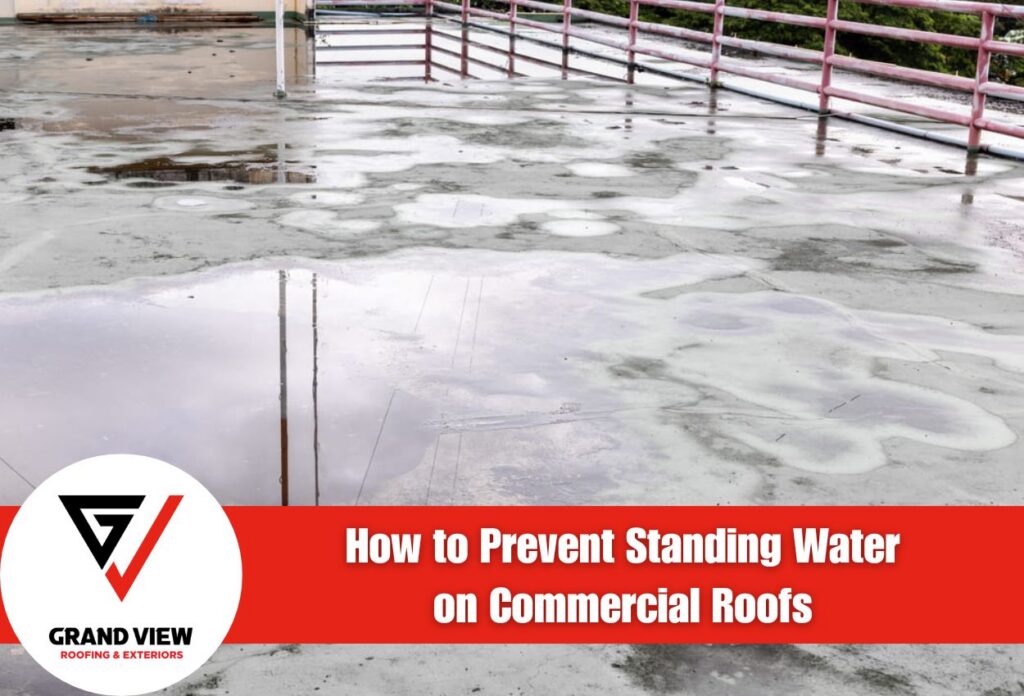

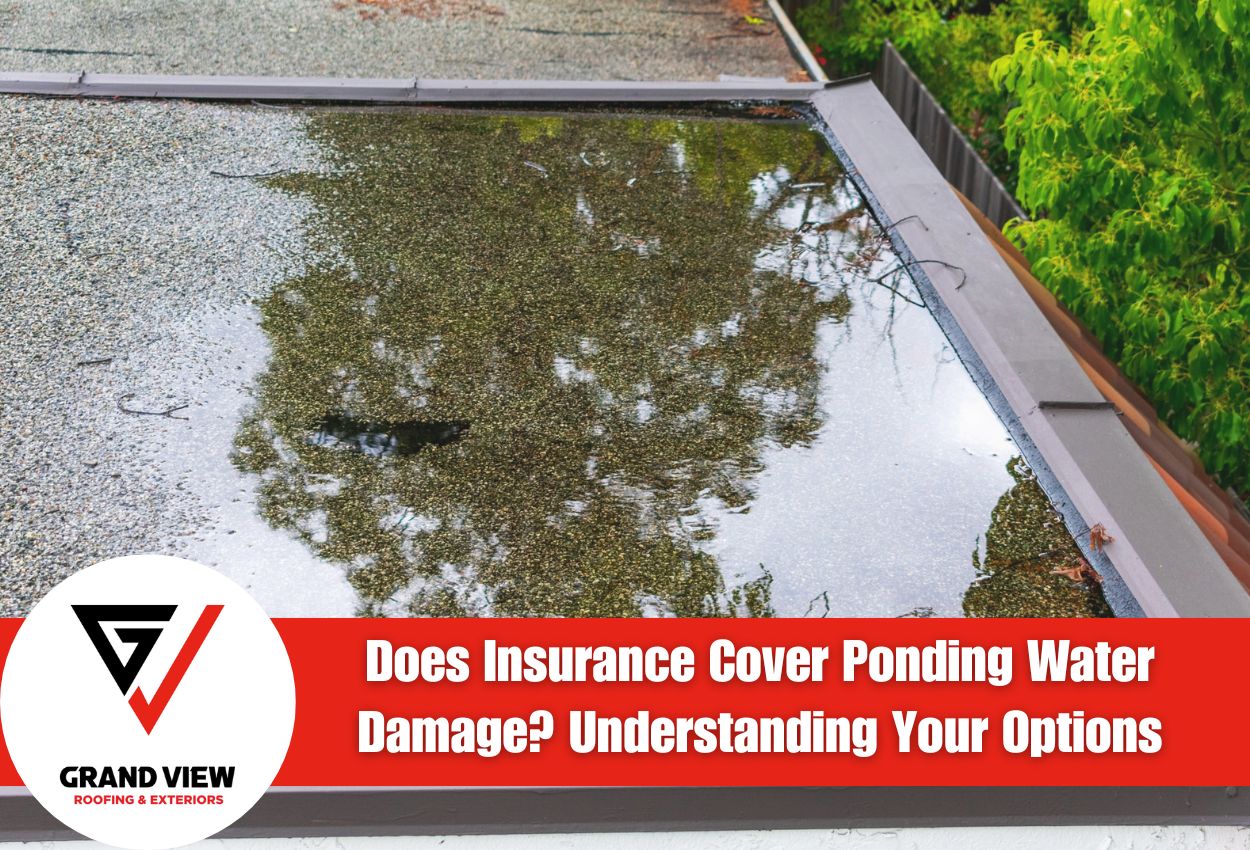
Ponding water is defined as water that remains on a roof more than 48 hours after rainfall stops, a condition that violates IBC Section 1502 and puts your roof membrane and structure at serious risk. South Jersey receives roughly 45 inches of rain per year, with 10 to 15 thunderstorm days annually capable of dumping water faster than most drainage systems can handle. That combination makes commercial roofs in this region especially vulnerable to standing water buildup.
Four problems cause most ponding on South Jersey commercial roofs: blocked drains, compressed insulation, roof deck deflection, and inadequate slope. Many roofs in the area are 15 to 30 years old, old enough that insulation has compressed under foot traffic and weather cycles, and metal or concrete roof decks have begun to sag between support points.
*Please note, price ranges listed in this article may not reflect the final cost of your project. Prices are subject to change based on various factors such as local labor rates, material quality, and more. All costs established in this article are rough estimates based on average industry rates.
What Drainage System Options Actually Fix Pooling Water on a Flat Commercial Roof?
Interior drains, scuppers, and overflow drains each solve pooling differently, and cost, roof size, and local stormwater rules all determine which one belongs on your building.
| Drainage Type | Typical Installed Cost (Per Unit) | Best-Fit Roof Size | Maintenance Frequency | Clog Risk |
|---|---|---|---|---|
| Interior Drain | $350 to $900 | 10,000+ sq ft | 2 to 4 times per year | High |
| Scupper | $200 to $600 | Under 10,000 sq ft | 1 to 2 times per year | Medium |
| Overflow Drain | $150 to $400 | Any size (supplemental) | 1 to 2 times per year | Low |
Interior drains outperform scuppers on large roofs because water does not have to travel far across the roof deck to reach an exit point on roofs over 10,000 sq ft; that distance difference matters. Scuppers cost less and are easier to inspect, but placement depends entirely on parapet wall layout. A common baseline is one scupper per 50 linear feet of parapet wall; spacing them farther apart raises ponding risk between outlets.
Before specifying any system, verify with your local Construction Official; many South Jersey municipalities require control flow drains to manage stormwater runoff under local ordinances, which directly affects drain sizing and the type of system allowed. Getting that confirmation early prevents expensive redesigns after installation.
How Do You Fix Inadequate Slope on an Existing Commercial Roof?
The IBC and South Jersey roofing standards require a minimum slope of ¼ inch per foot to drain water effectively, and two methods can correct inadequate slope on an existing roof: tapered polyiso insulation assemblies and structural re-sloping. Tapered insulation is far less disruptive and costs $3.50 to $6.00 per sq ft installed, while structural re-sloping runs $8.00 to $15.00 per sq ft and often requires temporary business interruption. Choosing between them depends on the condition of the existing roof deck, membrane age, and how far off the current slope actually is.
| Method | Installed Cost (Per Sq Ft) | Disruption Level | Existing Membrane Retained? |
|---|---|---|---|
| Tapered Polyiso Insulation | $3.50 to $6.00 | Low | Often yes, if membrane is sound |
| Structural Re-Slope | $8.00 to $15.00 | High | No full tear-off required |
Tapered polyiso adds slope in increments of ⅛ inch per foot, starting at a ½-inch minimum thickness. Panels are cut and arranged to direct water toward drains without rebuilding the roof deck below. The energy code New Jersey has adopted also limits how much of a tapered system’s added insulation thickness near a roof drain can count toward the roof’s average R-value for compliance purposes, a detail that affects how tapered panels are laid out near each drain point.
Before installing tapered insulation over an aging TPO, PVC, or EPDM membrane, all common on South Jersey commercial roofing buildings, core samples and moisture scans should be performed. Wet or compressed insulation underneath a membrane will trap moisture and cause the new assembly to fail prematurely. Grand View Roofing & Exteriors recommends getting both tests done before committing to either correction method.
Which Roof Coating Best Prevents Water Ponding on a Flat Commercial Roof?
Silicone is the best roof coating for preventing water ponding damage because it does not degrade or blister under prolonged standing water, unlike acrylic, which loses adhesion and breaks down with extended exposure to standing water.
| Coating Type | Ponding Water Resistance | Installed Cost (Per Sq Ft) | Recoat Interval | Compatible with TPO/EPDM? |
|---|---|---|---|---|
| Acrylic | Poor; loses adhesion after 48+ hours submerged | $0.75 to $1.50 | 5 to 7 years | Yes, with primer |
| Silicone | Excellent rated for standing water exposure | $1.50 to $2.50 | 10 to 15 years | Yes, most membranes |
| Polyurethane | Good; resists short-term ponding | $1.75 to $3.00 | 7 to 10 years | Yes, check membrane type |
South Jersey’s annual humidity runs between 60% and 75%, which slows evaporation and keeps water on the roof longer than drier climates, making silicone’s standing water tolerance especially important here. Acrylic costs the least upfront, but its shorter recoat interval of 5 to 7 years and poor ponding performance make it a poor long-term choice for low-slope roofs that hold water regularly. Silicone’s 10 to 15 year recoat interval and resistance to prolonged water exposure make it the most cost-effective coating choice over time for flat commercial roofs in this region.
Coatings extend membrane life and add waterproofing protection, but they are a corrective supplement, not a substitute for proper drainage slope. Addressing root-cause drainage deficiencies, like those described in the sections above, must come first.
How Do You Know Which Solution Is Right for Your Roof’s Ponding Problem?
Start with a professional moisture scan before touching anything else. Infrared thermography costs $0.05 to $0.15 per sq ft and reveals wet insulation that would otherwise get trapped under new material. For any roof over 10 years old, treat this as Step 0. Then work through the following decision points:
- Clogged drains suspected: Clean and inspect drains first. Drain service costs $150 to $400 per unit, the lowest-cost fix available and the right starting point before assuming a slope problem exists.
- Slope confirmed below ¼”/ft by survey: Add tapered insulation. A professional survey removes the guesswork. Installing tapered polyiso over an adequately sloped roof wastes money and misses the actual problem.
- Membrane is aged, but slope is adequate: Apply a silicone coating. Silicone tolerates prolonged standing water and carries a 10 to 15 year recoat interval, making it the right fit when drainage geometry is not the issue.
- Structural roof deck deflection is confirmed: Stop. Escalate to a structural engineer before any surface repair begins. Surface work on a deflecting roof deck will fail and may hide a load-bearing problem.
- Overflow capacity is too low for storms: Add scuppers or control flow drains sized to handle South Jersey storm volumes. One scupper per 50 linear feet of parapet wall is a common baseline.
South Jersey’s design ground snow currently runs 15 to 25 psf under the ASCE 7 edition referenced by New Jersey’s adopted building code. Adding 1 inch of ponding water adds about 5.2 lbs/sq ft, and older metal roof deck buildings can approach or exceed their design capacity. On buildings over 15 years old, the combination of snow weight and ponding water is a structural risk, not just a drainage nuisance. Match the fix to the confirmed cause, and always start with the moisture scan.
What Does It Actually Cost to Fix Standing Water Problems and What Happens If You Don’t?
Fixing drainage problems early costs $4.00 to $8.00 per sq ft installed for tapered insulation and drain servicing, but waiting until a membrane fails pushes emergency roof storm damage repair costs to $12.00 to $20.00 per sq ft, and a full roof replacement on a 20,000 sq ft South Jersey commercial building can run $150,000 to $300,000 depending on the system type chosen.
The cost gap between early action and delayed repair is not a small one. Ponding water measurably shortens the service life of TPO and EPDM membranes compared to properly drained roofs. A membrane rated for 20 years can fail well before that mark under repeated ponding conditions, forcing replacement cycles years ahead of what was budgeted. That shortened lifespan means owners may pay for two full roof replacements in the time a well-drained roof would have needed only one.
Compliance and Liability Add Another Layer of Risk
New Jersey UCC requires permits and a Certificate of Approval for commercial roofing work. Skipping that step creates its own problems. If unaddressed ponding water causes structural damage, building owners may face liability exposure and complications with property insurance claims. Insurers and inspectors look for documented maintenance and code-compliant repairs; a roof with a history of ignored ponding and no permits on file is a harder claim to defend.
Early intervention protects the building, the budget, and the owner’s compliance standing. Grand View Roofing & Exteriors helps South Jersey multi-family unit and commercial property owners identify drainage failures before they reach the emergency repair threshold the point where costs nearly triple and options narrow fast.
Ready to Stop Standing Water from Damaging Your South Jersey Commercial Roof?
Catching drainage problems before late summer thunderstorms or a winter Nor’easter hits can be the difference between a $4.00 to $8.00 per sq ft fix and a full replacement pushing $150,000 to $300,000. Grand View Roofing & Exteriors serves South Jersey commercial property owners with professional roof drainage inspections that include moisture scanning and slope evaluation the same diagnostics that prevent small ponding issues from becoming structural risks.
Schedule your free assessment.
Not ready to schedule? Learn more about commercial roofing drainage solutions.