

 24/7 emergency services


 Call Us Today - (856) 305-9883


What Are the Most Telling Signs Your fascia board Needs Replacement in South Jersey?
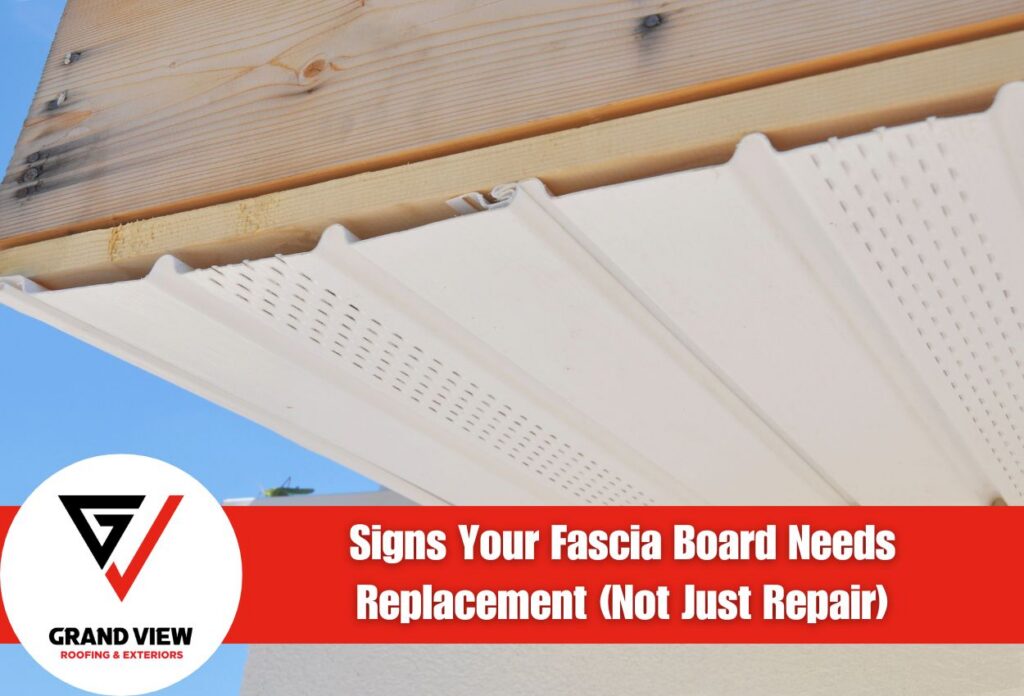

Visible rot, peeling paint, sagging gutters, and mold growth are the 4 clearest signs a fascia board needs full replacement, not just a patch in South Jersey. With 40 to 50 inches of annual precipitation and year-round humidity sitting between 60% and 70%, wood fascia board breaks down faster here than in drier inland regions. These conditions are not minor. They signal that the board has absorbed enough moisture to compromise the structural support holding your gutters in place.
Not every fascia board problem requires replacement. Small paint chips or surface scuffs can often be repaired without pulling the board. But rot, mold, and drooping gutters mean moisture has already worked its way deep into the wood. At that stage, patching only delays the larger repair.
South Jersey homes built between 1950 and 1990 face this problem more often than newer construction. Most of those homes have original wood fascia boards that have been exposed to decades of heavy rain, humidity, and hard winters. This article walks through each warning sign so homeowners can make a confident call on repair versus full replacement.
What Do Rotting Fascia Board Symptoms Actually Look Like Up Close?
Soft spots deeper than ¼ inch when you press a finger firmly into the wood almost always indicate structural rot, meaning surface treatment will not fix the problem, and full board replacement is the right call.
- Soft or spongy wood when pressed: A healthy fascia board feels solid and firm. If the wood compresses more than ¼ inch under moderate finger pressure, moisture has broken down the internal wood fibers, and the board has lost its structural integrity.
- Dark discoloration or black staining: Uniform darkening across the board face, especially in patches wider than 2 to 3 inches, signals deep moisture saturation, not just surface dirt or weathering.
- Visible fungal or mold growth: White, gray, or black fuzzy patches growing directly on the fascia board surface mean the wood is wet enough to feed organic growth. South Jersey’s humidity of 60% to 70% year-round makes this condition develop faster than in drier climates.
- Crumbling or fibrous wood grain: When the wood surface breaks apart in stringy layers rather than clean chips, the cellulose structure inside has decomposed. No filler or caulk can restore strength at that point.
- Separation at board joints: Gaps wider than ⅛ inch between fascia board sections allow water to pool inside the joint. In Camden, Gloucester, and Burlington counties, winter temperatures of 25 to 40 degrees Fahrenheit cause that trapped water to freeze, expand, and push the crack wider each season, a pattern that goes well beyond ordinary moisture damage.
Water staining adds another layer of confirmation. Brown streaking below the roofline, white chalky deposits near joints, and overflow marks from gutters are all fascia board water damage signs pointing to ongoing leaks, not past problems. When staining runs more than 6 inches below the roofline, replacement is almost always more cost-effective than repeated spot repairs.
Is Peeling Paint on your fascia board a Cosmetic Problem or a Structural Warning?
Peeling paint on fascia board falls into 3 distinct scenarios, and only 1 of them means repainting is enough. The other 2 require investigation or full replacement before any paint touches the surface.
- Surface-only peeling from UV exposure: If paint has lasted 7 to 10 years, the board surface feels firm and completely dry beneath the peeled areas, and the wood shows no staining or softness, repainting is the right call. This is a paint-age problem, not a wood problem.
- Peeling caused by moisture migrating from behind the board: When paint bubbles or lifts in patterns that follow seams, nail holes, or soffit gaps, moisture is pushing through the board from the back side. Repainting before finding and fixing that moisture source will fail again within 1 to 2 seasons.
- Peeling paired with soft wood underneath: Press a firm finger into any area where paint has lifted. If the wood indents or flexes at all, the board has already started to break down structurally. Replacement is required when paint cannot restore what rot has destroyed.
- Repeat peeling at the same location within 5 years: Paint failing twice in the same spot within 5 years is a sign of a moisture problem that the board cannot shed on its own. Replacement is warranted regardless of how firm the surface feels at that moment.
South Jersey homeowners in coastal zones near the Delaware Bay and the Atlantic coast face an added complication. Salt-filled air accelerates paint adhesion failure on wood fascia board and can make surface peeling look like a simple paint-age issue when the board underneath is already deteriorating. For those coastal areas, aluminum-clad or PVC fascia board is the recommended replacement upgrade both materials resist salt corrosion and hold up far longer than painted wood in that environment. Our fascia board and soffit installation service covers both wood and PVC options for South Jersey homes.
How to Tell If Fascia Board Damage Has Already Spread to Your Gutters and Soffit
Fascia board damage almost never stays contained to the fascia board alone. By the time visible rot appears on the face of the board, the gutters and soffit above and below it have typically already been affected. A gutter pulling away from the roofline by more than ½ inch is a measurable sign of underlying fascia board failure, not a loose bracket or a mounting problem. The table below shows how damage level tracks across all 3 components.
| fascia board Damage Level | Typical Gutter Impact | Typical Soffit Impact |
|---|---|---|
| Minor surface rot | Minor gap at bracket | No impact |
| Moderate structural rot | Gutter pitch misalignment of ¼ inch or more | Discoloration |
| Full board failure | Complete gutter detachment | Active water entry into the soffit cavity |
South Jersey nor’easters and tropical storms drive high coastal winds that frequently pull gutters away from fascia boards that have already been weakened by rot. Once the fascia board can no longer hold the gutter mounting screws firmly, the connection fails fast under that wind pressure. Ignoring soffit damage at the time of fascia board replacement typically results in a callback repair within 12 to 24 months, which means paying for 2 mobilizations instead of 1. Gutter installation and repair, and soffit inspection accompany most fascia board replacements in South Jersey for exactly that reason. If any of these signs appear together, treat the repair as a system issue rather than a single-board problem.
When Should You Replace vs. Repair a fascia board, And What Does Each Cost?
Replacement becomes the cost-superior choice when repair costs exceed 40% of full replacement cost, or when the same board has been patched more than once in a 5-year window.
| Scenario | Average Material Cost | Average Labor Cost (South Jersey) | Expected Lifespan Outcome |
|---|---|---|---|
| Surface patch repair | $10 to $30 | $75 to $150 | 1 to 3-year extension |
| Full wood fascia board replacement | $1 to $3 per linear foot | $5 to $8 per linear foot | 15 to 20 years |
| PVC fascia board replacement | $2 to $5 per linear foot | $5 to $8 per linear foot | 25 to 30 years |
A surface patch costs the least upfront, but at $75 to $150 in labor alone for only 1 to 3 years of added life, repeat repairs add up fast. PVC fascia board at $2 to $5 per linear foot in materials delivers 25 to 30 years of service roughly double the lifespan of wood making it the stronger long-term value for South Jersey homes exposed to high humidity and coastal weather. Wood replacement remains a solid option for interior or sheltered rooflines where moisture exposure is lower.
New Jersey requires roofing contractors performing fascia board replacement to hold a Home Improvement Contractor license from the Division of Consumer Affairs. Local South Jersey building permits may also be required when fascia board work involves gutter reinstallation. Confirm permit requirements with your municipality before scheduling any work. A professional roof inspection can also identify related issues with roof decking and flashing before replacement work begins.
Does Replacing Your fascia board Add Value and Prevent Larger Repair Costs?
Yes and the numbers make the case clearly. Fascia board replacement averages $8 to $13 per linear foot installed, while roof deck repairs caused by leaks from rotted fascia board run $500 to $1,500 per affected section. Full soffit replacement adds another $20 to $30 per linear foot on top of that. Delaying a straightforward fascia board replacement can turn a modest repair into a multi-thousand-dollar structural project.
The damage path is predictable. Rotted fascia board lets water seep past the roofline edge and into the roof decking and soffit framing behind it. Once that framing absorbs moisture, the repair scale expands beyond the fascia board alone. Catching fascia board rot early, before it reaches the roof decking and soffit, is one of the few home repairs where acting fast genuinely saves money rather than just preventing future problems.
Timing and Material Upgrades
Late spring and early fall are the best scheduling windows in South Jersey. Summer humidity regularly climbs above 70% to 80%, which slows paint adhesion and caulk curing and can compromise the finish of a new installation. Winter freeze conditions create similar problems during the work itself. Scheduling in those shoulder seasons keeps installation quality high.
Material choice matters just as much as timing. Upgrading from wood to PVC or aluminum-clad fascia board at replacement eliminates repainting costs estimated at $1 to $3 per linear foot every 5 to 7 years for painted wood. Over a 25-year period, that upgrade reduces long-term maintenance costs by an estimated 30% to 40%, making the higher upfront material cost easy to justify.
Ready to Stop Guessing? Here’s How to Get a Fascia Board Inspection in South Jersey
Catching fascia board rot before it reaches your roof deck or soffit can be the difference between an $8 to $13 per linear foot repair and a multi-thousand-dollar structural project and a professional inspection makes that call in a single visit. Grand View Roofing & Exteriors serves Camden, Gloucester, and Burlington counties, assessing rot depth, soffit condition, and gutter alignment together so South Jersey homeowners get a clear picture without multiple service calls.
The next step is a low-commitment free estimate, not a contract.
Not ready to schedule? Learn more about fascia board replacement.