





 24/7 emergency services


 Call Us Today - (856) 305-9883


Understanding the 25% Rule in Roofing and Why It Matters for Your Home
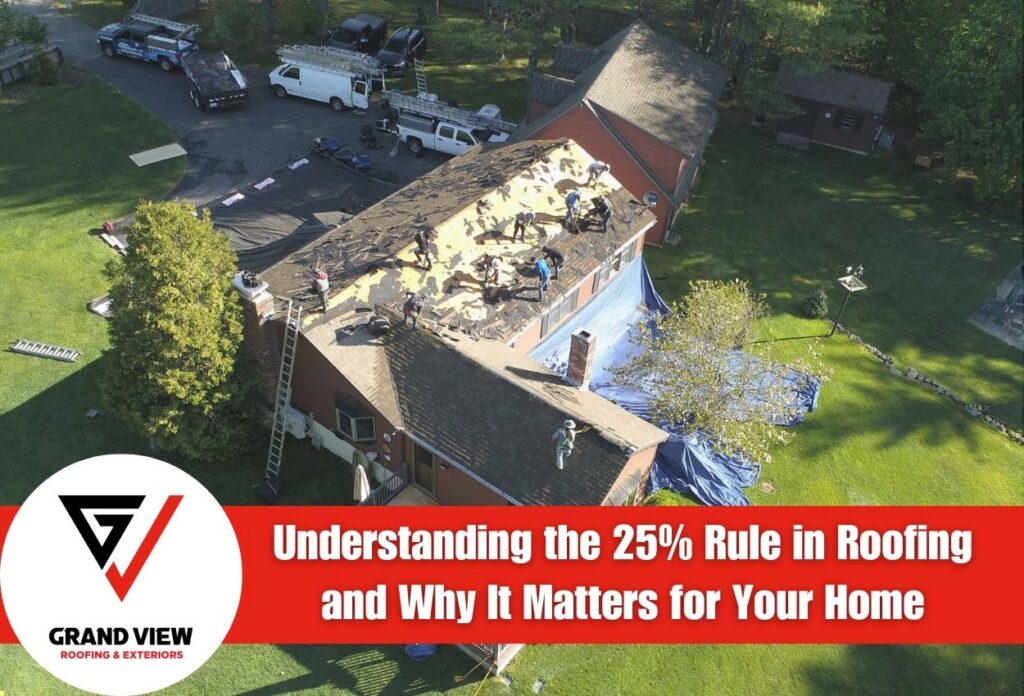

The 25% rule in roofing is an industry standard that determines when roof repairs should become a complete roof replacement. This roofing standard establishes that when damaged or deteriorated roofing materials exceed 25% of the total roof area within 12 months, property owners must replace the entire roof rather than perform partial repairs.
Building codes and insurance companies implement this roofing replacement guideline to ensure structural integrity and safety. The rule prevents homeowners from making piecemeal repairs that could compromise the roof’s overall performance and create safety hazards. Insurance providers often reference this threshold when evaluating claims and determining coverage for roof damage assessment situations.
This regulation applies to various roofing scenarios, including storm damage, wear-related deterioration, and planned renovations. When roof damage assessment reveals that repairs would affect more than a quarter of the surface of the roof, the partial roof replacement option becomes unavailable, requiring full system replacement to maintain code compliance and insurance coverage eligibility. This rule is not universal and depends on whether your local jurisdiction has adopted this provision from the International Existing Building Code. Some areas use different thresholds, such as 50%.

How Building Codes and Insurance Companies Apply the 25% Rule
Building codes across municipalities enforce the 25% rule to maintain structural safety standards when roofing replacement guidelines come into play. Local code officials evaluate roof damage assessment reports to determine whether repairs exceed the threshold requiring complete replacement. When deterioration or damage affects more than 25% of the surface of the roof area, building departments require full replacement because once more than 25% is replaced within 12 months, the entire roof must be brought into compliance with current building code requirements.
Insurance companies utilize this same roofing industry standard when processing claims and determining coverage parameters. Adjusters conduct thorough roof damage assessment evaluations to calculate the percentage of affected roofing materials. If damage exceeds the 25% threshold, insurance policies typically cover total replacement rather than partial roof replacement repairs. This approach protects both insurers and homeowners by ensuring the restoration that meets current building standards and prevents recurring claims from inadequate repairs.
The rule also applies when multiple repair incidents occur within 12 months, even if individual repairs fall below the threshold. This cumulative approach prevents gradual deterioration from compromising overall roof performance while maintaining consistent roofing replacement guidelines across different jurisdictions and insurance providers.
Identifying When Your Roof Damage Triggers the 25% Threshold
Quick Decision Guide: Repair vs. Full Replacement
| Decision | Partial Repair / Patchwork | Full Roof Replacement |
|---|---|---|
| Threshold | Damaged area is under 25% of the total roof surface. | Damaged area is over 25% of the total roof surface. |
| Timeline | Individual minor incidents | Cumulative damage within a 12-month period |
| Code Compliance | Repairs must match existing materials | Entire roof must be brought up to current building codes |
| Insurance Impact | Often covers only the specific damaged section (minus deductible) | Typically triggers coverage for the entire system if the 25% threshold is met, but will depend on individual policies |
| Long-Term Value | Cost-effective for isolated storm or wind damage | Prevents “piecemeal” failures and resets the full manufacturer warranty. |
| Structural Integrity | Best for localized issues (e.g., one slope or near a chimney) | Required when widespread deterioration is found roof framing members are sagging or broken |
Accurate roof damage assessment requires systematic measurement techniques to determine whether repairs exceed the 25% rule threshold. Property owners can begin by documenting visible damage areas, including missing shingles, exposed underlayment, and deteriorated sections. Creating a grid system helps measure damaged square footage against total roof area, providing preliminary calculations before professional evaluation. Structural compromises such as sagging sections, damaged roof decking, or compromised flashing must be included in total damage calculations since these issues affect overall roof integrity.
Professional contractors employ specialized inspection methods to ensure precise percentage calculations for code compliance and insurance documentation. Licensed inspectors use measuring tools, drone technology, and moisture meters to identify both visible and hidden damage throughout the roofing system. These evaluations document deteriorated materials, installation defects, and weather-related damage to create detailed reports that satisfy building department requirements. Professional roof damage assessment includes photographic evidence, measurements, and material condition reports that insurance adjusters and code officials require when determining whether partial roof replacement remains viable or complete replacement becomes necessary under roofing replacement guidelines.
When Partial Roof Replacement Remains Feasible
Certain damage scenarios allow property owners to pursue partial roof replacement when repairs stay within the 25% rule parameters. Localized storm damage affecting isolated sections, such as hail impact on specific roof slopes or wind damage limited to particular areas, often falls below the threshold for complete replacement. Age-related deterioration concentrated in high-exposure zones, including south-facing slopes or areas near chimneys, may qualify for targeted repairs when damage calculations remain under 25% ofthe total surface of the roof area.
Strategic repair timing helps homeowners manage roofing replacement guidelines effectively while maintaining warranty coverage and code compliance. Addressing minor issues immediately prevents cumulative damage from triggering the 25% threshold over 12-month periods.
Professional roof damage assessment helps identify which sections require immediate attention and which areas can wait, allowing strategic planning that preserves partial roof replacement options. This approach enables cost-effective maintenance while ensuring proper adherence to roofing industry standards and building code requirements throughout the repair process.
Financial Implications of the 25% Rule for Homeowners
The 25% rule creates significant budget planning implications when roof damage assessment determines whether partial repairs remain viable or complete replacement becomes mandatory. Property owners facing damage below the threshold can allocate resources for targeted repairs, typically requiring smaller financial commitments spread over manageable timeframes. However, when damage exceeds 25%, homeowners must prepare for substantial replacement expenses that require immediate financial planning. Understanding this threshold helps property owners establish emergency funds and maintenance budgets that accommodate either repair scenario based on damage assessment outcomes.
Insurance deductible structures vary considerably between partial repairs and total replacement projects under roofing replacement guidelines. Partial roof replacement typically involves single deductible payments for specific damage incidents, allowing homeowners to manage smaller out-of-pocket expenses. Complete replacement projects often trigger higher deductible amounts but provide coverage for entire roofing systems. Insurance policies may offer better coverage ratios for full replacements, reducing overall homeowner financial responsibility despite a larger project. Roofing industry standards require documentation proving damage exceeds the 25% threshold before insurers approve total replacement coverage, making professional roof damage assessment essential for maximizing insurance benefits and minimizing personal financial exposure.
Working with Roofing Contractors Within Industry Standards
Selecting qualified contractors who understand roofing replacement guidelines ensures proper compliance with the 25% rule and building code requirements. Property owners should verify that potential contractors have experience conducting accurate roof damage assessment evaluations and maintaining detailed documentation for insurance and permit purposes. Essential questions include asking about their familiarity with local building codes, previous experience with 25% rule projects, and their process for measuring damaged areas. Contractors should demonstrate knowledge of when partial roof replacement remains viable or situations requiring complete replacement under roofing industry standards.
Reputable contractors will never suggest circumventing building codes or propose questionable workarounds that violate established regulations. Warning signs include contractors who recommend hiding damage from inspectors, suggest avoiding permit requirements, or propose mixing incompatible materials to stay below the 25% threshold. Professional contractors understand that proper roof damage assessment protects both homeowner and contractor liability while ensuring long-term roof performance. They should provide transparent documentation, support permit applications when necessary, and explain how their recommendations align with current roofing replacement guidelines and insurance requirements for code-compliant installations.
Making Informed Decisions About Your Roof Replacement Timeline
Strategic planning helps property owners address roof issues before they reach the 25% threshold through preventive maintenance and early intervention approaches. Regular inspections allow homeowners to identify minor problems such as loose shingles, small leaks, or flashing issues before they expand into larger damage areas. Scheduling annual roof damage assessment evaluations with qualified professionals helps track deterioration patterns and plan repairs during the best possible timing windows. This proactive approach prevents multiple small issues from accumulating into major damage that triggers the 25% rule within 12-month periods.
When professional roof damage assessment confirms the need for full replacement under roofing replacement guidelines, preparation for permit processes and inspection requirements becomes essential. Building departments require detailed documentation showing damage calculations, material specifications, and compliance with current roofing industry standards. Property owners should gather existing warranty information, insurance documentation, and previous repair records before beginning permit applications. Understanding local inspection schedules and approval timelines helps coordinate project phases efficiently while ensuring contractors can proceed without delays once permits are approved under established roofing replacement guidelines.
Protect Your Home with Grand View Roofing & Exteriors
If you’re facing roof damage and unsure if it meets the 25% rule for a full replacement, don’t hesitate to contact Grand View Roofing & Exteriors. Understanding whether your roof damage requires a partial or full replacement is important for maintaining the safety and structural integrity of your home. Our expert team can provide a thorough roof damage assessment and guide you through the insurance and permit processes.
Don’t wait until it’s too late! Call us today at (856) 305-9883 to schedule a professional inspection and ensure your roof meets all industry standards. Trust Grand View Roofing & Exteriors to keep your home safe and compliant.
Frequently Asked Questions
Got questions about your roof? We’ve got answers. From maintenance tips to insurance claims and repair timelines, our FAQ section covers the most common concerns homeowners have. Get informed and make confident decisions about protecting your home.
People Also Ask
How can homeowners determine how the 25% roofing rule applies in their specific municipality?
The only reliable way is to contact your local building department directly. Roofing codes are adopted and modified at the city and county level, and enforcement can vary. Request the current roofing code section related to repair limits and replacement requirements before starting any project.
Does the 25% roofing rule apply the same way to asphalt shingles, metal roofs, and tile roofs?
The rule generally applies across roofing types, but how damage is measured can differ depending on the material. Some materials are evaluated by surface area, while others may be assessed by sections or panels. Local code definitions determine how “25%” is calculated for each roofing system.
What happens if a homeowner ignores the requirement for full replacement after exceeding the 25% rule?
Ignoring the rule can lead to failed inspections, code violations, insurance claim denial, and complications when selling the property. More importantly, continuing to patch a roof that requires full replacement can result in structural damage and safety risks.
Related Articles
-
 July 14, 2026Everything You Need to Know About A Commercial Roof Repair in South JerseyCan your South Jersey commercial roof handle coastal weather? Learn repair costs and warning signs.
 -
 October 3, 2025Can You Replace Half a Roof: Understanding Partial Roof Replacement OptionsThinking about replacing only half your roof? Learn when partial replacement can cut costs, how to match materials seamlessly.
 -
 June 4, 2026Asphalt Shingle Roofing in NJ: Types, Costs & LifespanCompare asphalt shingle types, costs, and lifespan, then get your free South Jersey estimate today.
Protect Your Home with Expert Roofing
Don’t wait for leaks or storm damage to cause costly repairs. Our experienced roofing team provides fast, reliable service, high-quality materials, and lasting results. Ensure your home stays safe, secure, and looking great—contact us today for a free estimate.