


 24/7 emergency services


 Call Us Today - (856) 305-9883


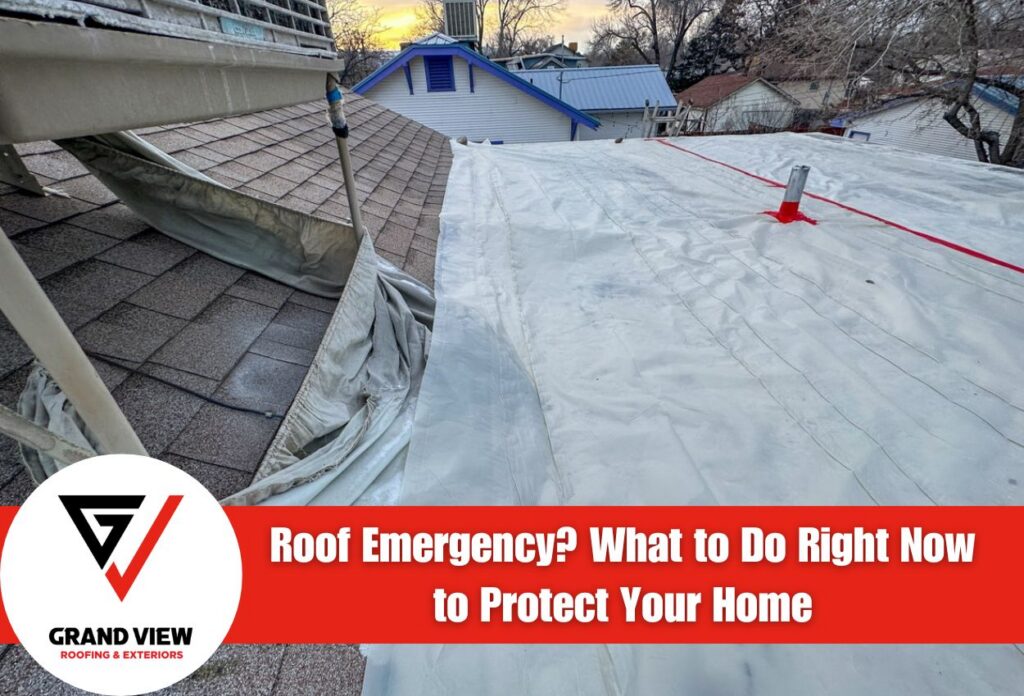

In a roof emergency, your first four steps are: get everyone to safety, stop water from spreading inside, photograph all visible damage, then call a licensed roofing contractor ideally within the first 24 hours. That window matters because water that reaches insulation, drywall, or electrical fixtures can trigger mold growth and structural damage within just 1 to 2 days.
North Texas sees more than 50 severe storms per year, and the April through June stretch is the peak period for hail strikes and wind damage across Grand Prairie, Irving, and the broader Dallas-Fort Worth area. A single storm can strip shingles, crack flashing, and leave your attic open to rain in minutes.
Acting fast limits how far that damage spreads. The sections below walk through each step in detail, from protecting your home tonight to filing an insurance claim and choosing the right contractor for permanent repairs.
How Do You Stop a Roof Leak from Inside Your Home Right Now?
Move fast: interior water damage can saturate insulation and sheathing silently within 6 to 12 hours of a heavy rainstorm, so every minute counts. Follow these steps in order.
- Find the actual entry point. Water travels along rafters and roof decking before it drips. The wet spot on your ceiling is rarely where the leak starts. Trace upward and toward the roof peak to find the true source.
- Place a catch container immediately. Slide a bucket or trash can under the drip. Lay down towels around it to protect your floor from overflow during extended rain.
- Puncture a bulging ceiling at its lowest point. Use a manual screwdriver or an awl to make a small hole at the lowest point of any ceiling bubble. This releases trapped water in a controlled stream, reducing pressure and preventing a wider ceiling collapse that would cause far more damage.
- Check the distance to electrical fixtures. If water is within 24 inches of any light fixture, ceiling fan, or electrical outlet, shut off the circuit breaker for that zone immediately: this is an electrical emergency, not just a water emergency.
- Apply a temporary seal on accessible interior surfaces. Roofing tape or hydraulic cement can slow water movement on exposed rafters or sheathing you can reach safely from inside the attic.
These steps buy time, but interior-only repairs will not stop water from migrating through your roof deck, sheathing, or insulation. A licensed contractor should inspect the exterior within 24 to 48 hours to address the actual source before deeper structural damage sets in.
How Do You Install an Emergency Roof Tarp During or After a Storm?
Do not access your roof during active lightning or if there are any active wind conditions. Most professional emergency crews wait until sustained winds drop below 25 mph before physical tarping begins. That delay is not optional. Falls from wet, wind-loaded roof surfaces cause serious injury, and a tarp installed in high wind will fail before it can do any good.
Once conditions are safe, proper sizing and anchoring are what separate a tarp that holds from one that peels off in the next storm cycle.
Tarp Sizing for North Texas Storm Damage
- Extend at least 4 feet beyond the damaged area on all sides: this margin prevents wind from catching the edge and lifting the entire sheet.
- Run the tarp from the ridge all the way down to the eave on the affected slope. Stopping short traps water underneath the tarp edge and pushes it back into the damaged zone.
- Use 6 mil polyethylene minimum. Lighter tarps tear apart quickly under Texas hail and wind conditions and should not be used for storm protection.
Anchoring the Tarp Correctly
- Sandwich tarp edges between 2×4 lumber boards nailed at 12-inch intervals along each edge.
- Never nail directly through the tarp into the roof deck: that method tears out under wind pressure and punches new holes in your roof decking.
- Improperly anchored tarps routinely fail within one storm cycle in high-wind Texas conditions.
Reanchoring a failed tarp professionally costs $150 to $400, while a tarp that blows off overnight can produce $500 to $1,500 or more in additional interior damage from water that enters unchecked. If a tree has fallen on the house, do not attempt tarping until a contractor confirms the structure beneath is stable enough to walk on. Grand View Roofing & Exteriors responds to emergency calls across Grand Prairie, Irving, and the Dallas-Fort Worth area and can assess and tarp safely once storm conditions allow.
What Does Emergency Roof Repair Actually Cost, and What Does Insurance Cover?
Emergency roof repair costs in the Dallas-Fort Worth market range from under $400 for basic tarping to well over $5,000 for storm damage involving fallen trees and roof deck work, and what your insurance covers depends heavily on your deductible structure.
| Repair Scenario | Typical DFW Out-of-Pocket Cost | Texas HO-3 Wind/Hail Deductible Range | Typically Covered Under Standard HO-3? |
|---|---|---|---|
| Professional tarping | $150 to $500 | $3,000 to $6,000 (on a $300,000 home) | Yes, reimbursable as mitigation expense |
| Minor patch repair | $300 to $900 | $3,000 to $6,000 (on a $300,000 home) | Yes, if storm-caused: often below deductible |
| Partial section replacement | $1,200 to $3,500 | $3,000 to $6,000 (on a $300,000 home) | Yes, if storm-caused and adjuster inspects first |
| Tree removal + roof deck repair | $3,500 to $8,000+ | $3,000 to $6,000 (on a $300,000 home) | Yes, typically covered: file before repairs begin |
Texas homeowners insurance policies frequently carry separate wind and hail deductibles of 1% to 2% of the dwelling coverage value. On a home insured at $300,000, that means a $3,000 to $6,000 deductible before any coverage applies, which is why minor repairs often cost less than the deductible itself, making a claim unnecessary.
Temporary protective repairs like tarping and boarding are explicitly encouraged under most Texas HO-3 policies to prevent further damage and will not void a claim. However, permanent repairs made before the insurance adjuster inspects the damage may reduce or complicate your settlement, so document everything with photos and hold off on full repairs until the adjuster signs off.
Should You DIY the Temporary Repair or Call an Emergency Roofing Contractor?
DIY temporary repairs are reasonable only under a narrow set of conditions: if any of the following red flags apply, stop and call a contractor instead of getting on that roof yourself.
- DIY is reasonable if all four conditions are true: The damage covers less than 10 square feet, the roof pitch is 6:12 or lower, wind has fully stopped, and there is no electrical hazard present anywhere near the affected area.
- Call a contractor immediately if the pitch exceeds 6:12. Steeper slopes dramatically increase fall risk on wet or debris-covered surfaces: this is not a judgment call.
- Call a contractor if structural members or the ridge are involved. Damage at the ridge line or to roof framing is not a tarp-and-wait situation. It needs professional assessment before anyone walks that surface.
- Call a contractor if a tree is still in contact with the roof. A tree resting on framing can shift under added weight. Do not step onto any section that a fallen tree is touching.
- Call a contractor if any ceiling shows signs of sagging or collapse. A bowing ceiling means the structure above it’s already under stress: interior water management is the only safe move at that point.
If rain is still falling and the leak is actively getting worse, do not attempt exterior access. Focus on interior water management and call a contractor at the same time: those two actions happen together, not in sequence. Emergency roofing contractors in the Dallas-Fort Worth area typically respond within 2 to 6 hours during peak storms, though after-hours calls generally carry a mobilization fee of $200 to $500 on top of repair costs. Compare that to the cost of doing nothing: an unmanaged leak over 12 hours commonly causes $1,500 to $8,000 in interior damage, depending on the ceiling area affected. The service fee is the far smaller number.
How Does Acting Fast on Roof Damage Save You Money in the Long Run?
Delaying roof repairs by even 48 to 72 hours can multiply your total costs by 3x to 8x compared to acting within the first 24 hours. A quick emergency tarp and minor patching typically runs $300 to $1,200. Wait 2 to 3 days, and you are likely looking at insulation replacement, drywall work, and mold treatment stacked on top of that original repair bill.
| Response Window | Typical Damage Scale | Estimated Cost Range |
|---|---|---|
| Within 24 hours | Tarping and minor patching only | $300 to $1,200 |
| 48 to 72 hours | Wet insulation replacement | $500 to $1,500 |
| 48 to 72 hours | Drywall remediation | $1,000 to $3,500 |
| 48 to 72 hours | Mold treatment | $1,500 to $5,000+ |
North Texas summers make this timeline even tighter. Attic temperatures regularly exceed 90 degrees Fahrenheit, and wet insulation in those conditions can begin supporting mold growth within 24 to 48 hours faster than in cooler climates. A properly anchored emergency tarp installed within the first 12 hours can protect the roof for 30 to 90 days, buying enough time to navigate the insurance adjuster process and schedule permanent repairs without rushing your decision.
Speed does not mean skipping steps: it means not waiting. Contact Grand View Roofing & Exteriors quickly so the damage stays contained to the smallest possible job scale and cost.
Ready to Secure Your Roof? Here’s How Grand View Roofing & Exteriors Can Help Right Now.
Acting within the first 24 hours keeps emergency costs in the $300 to $1,200 range: waiting even 48 to 72 hours can push that number to $10,000 or more once drywall, insulation, and mold treatment stack up. Grand View Roofing & Exteriors serves Grand Prairie, Irving, and the greater Dallas-Fort Worth area with emergency roof response, including same-day tarping and damage assessment during storm season.
The team has direct experience with Texas hail and wind damage claims and knows what adjusters need to see before permanent repairs begin. Do not wait out the storm alone.
Not ready to schedule? Learn more about emergency storm damage roof repair.